
November 19, 2026
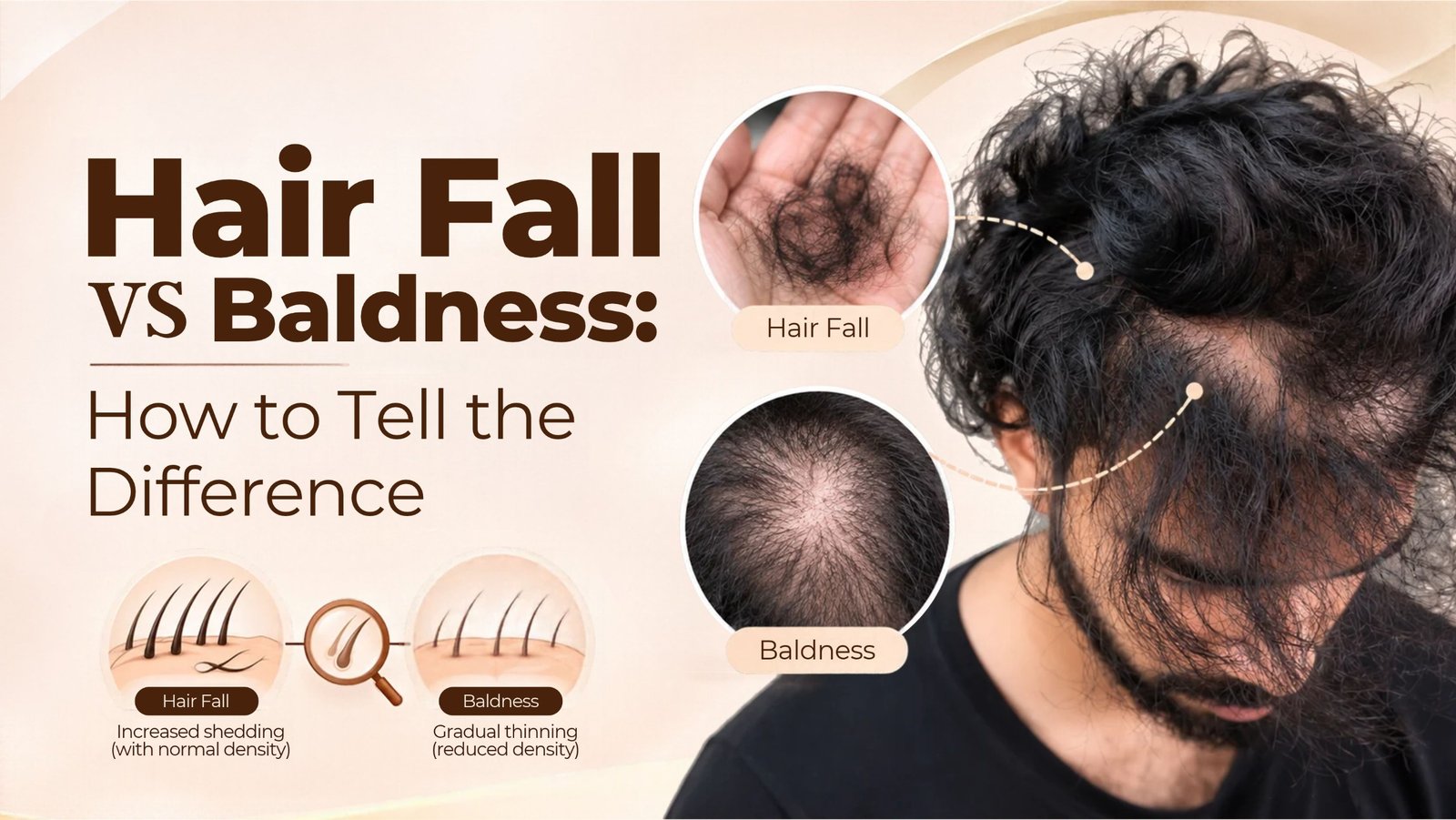
Hair Fall vs Baldness: How to Tell the Difference
Hair fall and baldness are common concerns affecting both men and women. Although these terms are often used interchangeably, they describe different conditions that require different treatment approaches. Understanding the difference between hair fall and baldness is essential for identifying early warning signs, preventing progressive hair thinning and selecting appropriate hair restoration treatments.
What Is Hair Fall?
Hair fall refers to the natural shedding of hair as part of the hair growth cycle. Losing approximately 50–100 strands daily is generally considered normal. However, excessive hair shedding may indicate an underlying health or scalp condition.
Common causes of excessive hair fall include:
- Nutritional deficiencies, particularly iron and protein
- Hormonal imbalances and thyroid disorders
- Physical or emotional stress
- Scalp infections and inflammatory conditions
- Certain medications and medical illnesses
In many cases, temporary hair shedding improves once the underlying cause is identified and managed appropriately.
What Is Baldness?
Baldness, medically associated with alopecia, involves noticeable reduction or absence of hair in specific scalp areas. Unlike temporary shedding, certain forms of baldness result from progressive follicular miniaturisation, where hair gradually becomes thinner and shorter.
Androgenetic alopecia, commonly known as male pattern baldness or female pattern hair loss, is a frequent cause of progressive thinning. Genetic predisposition and hormonal sensitivity play significant roles in its development.
Early diagnosis can help determine whether medical intervention or advanced hair restoration is appropriate.
Hair Fall vs Baldness: Key Differences
Hair Fall | Baldness |
Increased shedding of hair strands | Progressive reduction in hair density |
May occur throughout the scalp | Often follows recognisable thinning patterns |
Frequently associated with temporary triggers | Commonly associated with genetics and hormones |
Regrowth may occur after treating the cause | Usually requires ongoing management |
May develop suddenly | Often progresses gradually |
Early Warning Signs of Baldness
Recognising the early signs of baldness can support timely treatment decisions. Important indicators include:
- Gradually receding frontal hairline
- Persistent thinning around the crown
- Widening hair parting
- Increasing scalp visibility
- Progressive reduction in hair thickness
Sudden patchy hair loss, scalp inflammation or rapid thinning also requires professional evaluation to identify potentially treatable conditions.
Treatment Options for Hair Fall and Baldness
Effective hair fall treatment depends on identifying the underlying cause, evaluating scalp health and assessing follicular activity.
Depending on individual requirements, treatment may involve nutritional correction, dermatologist-prescribed medication or targeted scalp therapies.
For suitable patients, PRP hair treatment and GFC hair treatment may be considered as supportive options, although their effectiveness varies. Advanced techniques such as FUE hair transplant and Interlocking FUE hair transplant can help restore coverage in selected cases of established baldness.
Hair transplantation is not necessary for every patient experiencing excessive shedding.
When Should You Consult a Hair Specialist?
Consulting a qualified specialist is advisable when hair loss becomes persistent, scalp coverage decreases or visible bald patches develop.
A clinical assessment helps distinguish temporary shedding from progressive hair loss and establish realistic treatment expectations.
Understanding hair fall vs baldness is the first step towards effective hair care. While temporary shedding may improve with appropriate management, progressive baldness often requires targeted intervention.
At IFT Hair Science, patients can explore personalised hair loss assessments and treatment options, including PRP, GFC and advanced hair transplant procedures in Jaipur, Jodhpur and Gurugram.
Book a consultation with IFT Hair Science to understand your hair loss condition and explore suitable treatment options.